Programs in Action
A curriculum built around real community problems.
“Real work is the curriculum, and the classroom is wherever real problems are being solved.”
The Smart Greenhouse Program
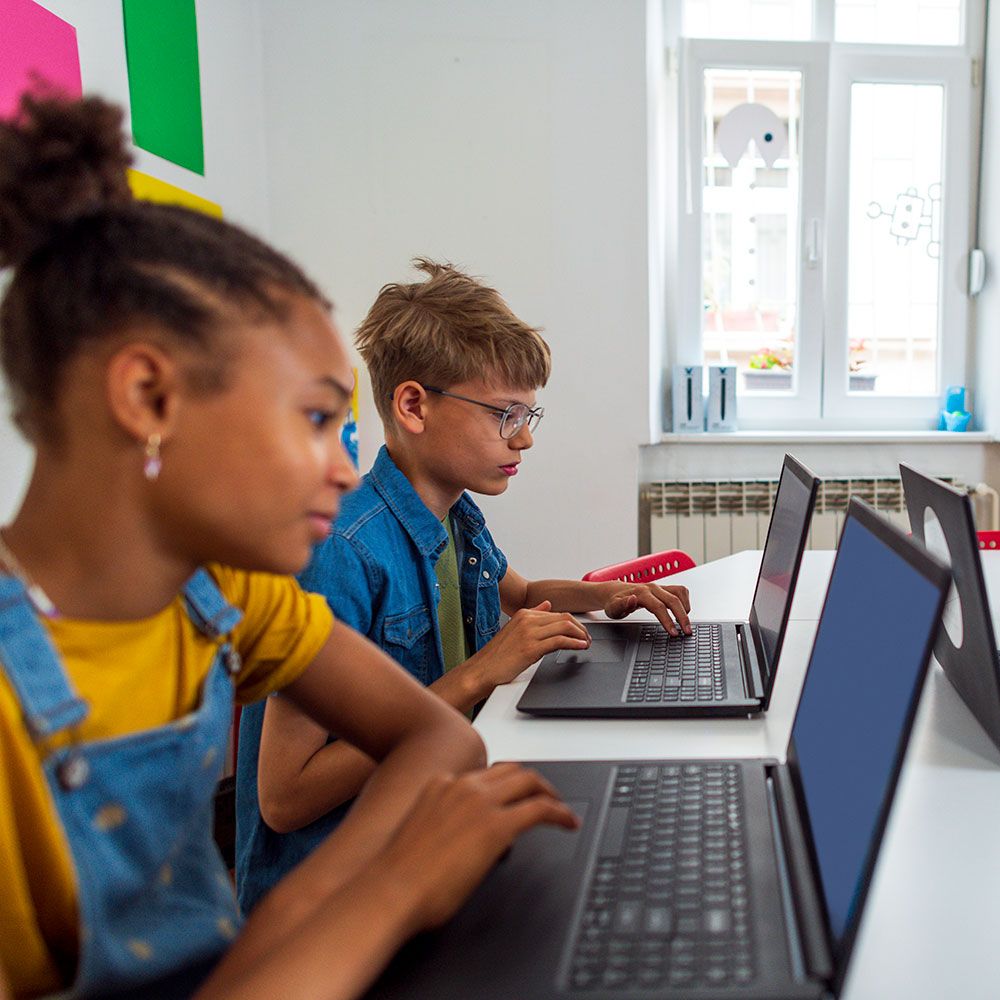
The Smart Greenhouse Program is a year-long, real-world learning experience in computer science and sustainable agriculture — born out of the 2025 partnership with Hazelwood Central High School. Unity Foundation developed the curriculum that teaches students the technical skills needed to operate it, and completed a pilot program in 2026. The 2026–27 cohort meets Fridays across 26 sessions, using Python, CodeHS, and micro:bit V2 to integrate software with real hardware — sensors, relays, actuators — on classroom grow stations, while the physical greenhouse is being built.
Across the St. Louis region, schools, universities, and community organizations are each doing meaningful work in isolation. Unity Foundation exists to connect those efforts — bringing separate pieces of good work together into one coherent program, the way a quilter joins individual squares into something whole.
In Year 1, students operate on classroom grow stations — not a full greenhouse build. A no-solder, instructor-assembled demo station uses a micro:bit V2 to manage a relay-controlled fan and water pump, with team carts of 3–4 plants each. The physical greenhouse itself is being built separately, through Hazelwood Central High School.
Key Features of the Program
Python, from zero
CodeHS and MicroPython across 26 sessions. No prerequisites, no CS teacher required.
Real hardware, real stakes
micro:bit V2, relay, pump, fan, soil probe, with a signed safety protocol before anything is energized.
Smart agriculture
Every team grows its own bed; every threshold in the code is a claim about a living crop, defended from data.
Data literacy
A season of real readings, a real anomaly to find, and a full session on how charts mislead.
Open source & ethics
Licensing, attribution, data ownership, and algorithmic fairness, taught as engineering, not an appendix.
Industry & capstone
A working engineer in the room, a public project site, a capstone defended to an outside panel.
The Learning Arc
26 sessions build one system — not twenty-six disconnected assignments — across two parallel challenge lanes: Micro Farm and Greenhouse Intelligence.
By the end of the year, students have built, tested, and documented a functional automated system, preparing them for future paths in agricultural technology, software engineering, and systems administration.
A 12-competency ledger tracks progress toward a Year 1 certificate plus two endorsements.
Aligned to five national frameworks: CSTA, NGSS, AFNR, ISTE, and Career Ready Practices.
The Connected Community Workforce Development Model
Unity’s emerging workforce development model creates a coordinated pathway that connects education, community organizations, employers, researchers, and industry partners into a shared ecosystem that prepares individuals for meaningful careers while helping communities address real workforce challenges. Participants build foundational professional and technical skills, engage in industry based capstone projects that address authentic community and business needs, and receive mentorship from professionals. The result is a learning experience that develops both career readiness and the leadership, collaboration, and problem-solving skills needed in today’s rapidly changing workforce.
Unity is collaborating with university researchers studying workforce pathways, community needs, and long-term outcomes while exploring innovative technology that helps individuals navigate education, training, employment, and support resources more effectively. Along with community-based partner organizations, early pilot cohorts will serve individuals who are exploring, launching, transitioning, or rebuilding their careers, providing valuable insight that will guide future expansion.
The vision extends beyond preparing individuals for a single job. By strengthening connections between learners, educators, employers, researchers, and community organizations, the ecosystem continuously grows, creating new opportunities for individuals while helping communities build a stronger, more resilient workforce for the future.

The SEED, SPROUT & RIVET Model
Unity Foundation’s work is organized around three connected stages: SEED — the shared infrastructure beneath everything, built on open-source solutions. SPROUT — the talent pipeline: a cradle-to-career curriculum starting in K-12. RIVET — turning contributors into capability: interns, young professionals, and career-changers placed against real institutional needs.
Cross-Sector Scalability. What begins in classrooms extends into broader applications. The same models that serve students support work in healthcare, energy, finance, defense, and manufacturing — creating continuity between education and the workforce.
University Partnerships. Unity Foundation collaborates with Saint Louis University (Open Source Lab and Student Ambassadors program), Southern Illinois University Edwardsville, the University of Missouri–St. Louis (curriculum modernization), Maryville University (PK-12 teacher training through the Center for Access and Achievement), and Harris-Stowe State University. Each collaboration is shaped by a consistent philosophy: authentic software engineering and technology education, not academic exercises.
Our SEED, SPROUT, and RIVET model is not a fixed structure handed down from organizational leadership — it is a living system that evolves in direct response to constituent feedback. See How We Listen for documented examples of how that feedback has already reshaped this curriculum.
The Cost to Families Is Zero.
Equity is not a program feature here — it is a design constraint that shaped every decision before a single lesson was written. All materials, hardware, and software are provided.
Every material, tool, and platform is free, running on district Chromebooks families already have. Language supports, IEP/504 accommodations, and accessibility are built into the lesson design from the start. 100% of student work is published openly — free for any district to adopt.
- Cost to familiesZero. Every material, tool, and platform is free — running in a Chrome browser on existing district Chromebooks.
- Language accessVisual scaffolding, translated key vocabulary, and multilingual peer learning structures are embedded by design, not added as afterthoughts.
- IEP & 504Accommodations are integrated at the lesson design level. The curriculum does not require modification for inclusion.
- Device accessAll tools run on district-issued Chromebooks. No family purchase required at any grade level.
Unity Foundation is actively committed to equitable access, working directly to dismantle barriers related to race, income, geography, language, ability, and educational background in every program and partnership we lead.
This is what workforce-aligned education looks like when it is designed for the students who need it most — not adapted for them after the fact.